VESTING DAILY
Good morning
The president spent Monday calling AI risk a hoax and then phoned a VC conference to say it on speaker, Automattic's board picked a fight with its founder and lost its seats, and OpenAI bought a camera company for roughly ten times what anyone had put into it.
Let's get into it.
The One Number
48 hours

Amodei published "Pace the Frontier" over the weekend, and for a moment it looked like the rare case of an industry asking to be restrained. Three parts: third-party evaluators stationed inside the frontier labs, an antitrust waiver letting American developers coordinate on how fast they ship, and eventually a treaty. Altman said he would match it. Musk said Dario is right.
Inside 48 hours both governments that would have to carry it had said no. Trump spent Monday on Truth Social calling Amodei a "perfect little angel," comparing AI doom to climate change, and settling on "the only control or 'guardrails' that AI needs is a STRONG AND SMART (High IQ!) PRESIDENT." That afternoon he phoned into the All-In Summit and said it again on speaker while Jensen Huang held the phone. In Beijing, foreign ministry spokesman Guo Jiakun called the idea fear-mongering that "serves no one's interest," and Global Times went after the chip ban buried in the essay and called the rest a Cold War script.
Count what survives. The antitrust waiver is Washington's to grant, and Washington is not granting it. The treaty needs both capitals, and both just called the premise a scare campaign. That leaves the one piece a lab can do by itself, which is open its own doors to the evaluators, and we are about to find out whether any of them does it alone. The essay runs its whole length without once using the words "open weights" or "open source," and the companies whose models anyone can already download appear a single time, inside a hyperlink.
The Fact Sheet
Temporal ($550M Raised, $12.55B Valuation, Series E). Open-source infrastructure that keeps long-running workflows alive when the pieces underneath them fail, which is most of what an agent product quietly needs. Annualized revenue passed $250 million on more than 200 percent growth across 4,300 paying customers, which is how a company gets from $5 billion in February to $12.55 billion in September. Backed by Lightspeed and Tiger Global.
Exein ($270M Raised, $1.7B Valuation). Rome-based runtime security that lives inside connected devices and industrial machines instead of on the network around them, now covering more than 2 billion of them. First-half ARR grew fourfold, and roughly half the revenue comes from Asia Pacific. Backed by Headline and Sofina.
Euclyd (€200M+ Raised, Series A). Eindhoven chip startup building what it calls agentic AI silicon, aimed squarely at the memory bandwidth and power draw that make inference expensive. Peter Wennink, the former ASML chief executive, is chairman. Backed by Samsung and Innovation Industries.
Zero ($10.3M Raised, Seed). Helsinki team building an AI system meant to replace the CRM rather than sit politely on top of one, which puts it against Salesforce and HubSpot from day one. Backed by Primary Venture Partners, with angel money from the founders of Lovable, Supercell and Langdock.
Headlines, No Fluff
Glass Imaging was started in 2019 by Ziv Attar and Tom Bishop, two former Apple engineers who ran the team that built Portrait Mode. Its neural networks are trained on one specific camera system and clean the image as the shutter fires rather than afterward, which is how you get a decent photo out of a lens the thickness of a coin. The Wall Street Journal broke the price. The company had raised about $30 million. Ten times paid-in capital, for a company that has never shipped a phone.
The money goes out over two years, split 40 percent to education, 40 percent to health, 10 percent to agriculture, 10 percent to digital infrastructure. Mark Suzman calls it a down payment against the $200 billion the foundation intends to spend before it closes in 2045. The examples are unusually concrete: a diagnostic tool in Penda Health's Kenyan clinics that lifted accuracy by 16 percentage points, an Indian farm advisory service with more than 740,000 subscribers. A philanthropy is underwriting the deployment work the labs keep describing as the easy part.
Up from 12 percent, in a survey run by BairesDev, which sells developer hours for a living. The panels differ in size and seniority year over year, so hold the jump loosely. The number worth keeping sits inside the sample: developers report saving 13 hours a week, up from 7.3, while spending 9 hours a week learning AI tools, up from about 4. Sixty-seven percent say they now spend more time reviewing AI-written code, 52 percent more time debugging it, and the survey puts hours on neither. The full workday AI gave back is, at best, half a workday.
On Vesting
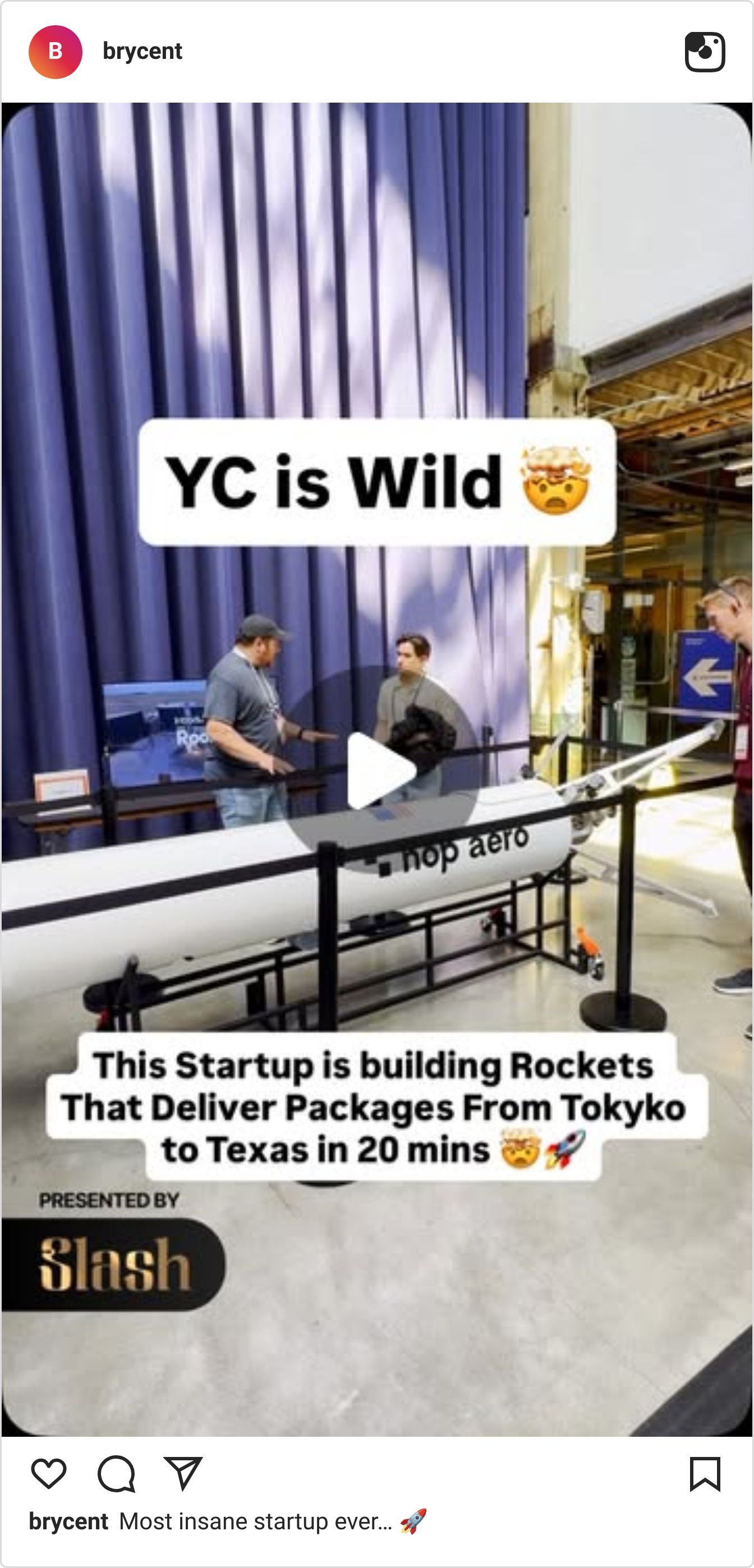
Open Doors
Y Combinator, Winter 2027. On-time applications close November 2 at 8pm PT. Decisions by December 11. ycombinator.com/apply
Techstars Anywhere. Applications close November 18. Program runs March 8 to June 3, 2027, fully remote. techstars.com/accelerators/anywhere
Founders Inc Blueprint II. Starts September 30 at Fort Mason in San Francisco, with initial checks of $100k to $250k. Applications are rolling, so the start date is the real deadline. f.inc
Still open: a16z Speedrun SR008, San Francisco, kicking off early 2027. No posted deadline, which historically means they close it when it is full. a16z.com/speedrun
Always rolling: Z Fellows gives you $10,000 for one week, plus an optional $10,000 investment at a $1 billion cap.
🤝 How Vesting Can Help You
Amodei just made "permanent, employee-level access for outside evaluators" the newest line in an AI vendor contract, and enterprise buyers move fast on language like that. If your pitch or your customer contracts don't already have an answer for "who verifies your safety claims," that's worth having before someone asks it in a deal.
Reply and tell us how you'd answer it, or get Featured and put the whole company in front of the list.
Till next time,
The Vesting Team (Brycent, Ajay, and Kamil)